Dan the Man: Action Platformer
- 4.7
- Rating
- 100.00M
- Installs
- Free
- Price

 Analysis by App-foxy
Some mobile games ask for a long commitment before they become enjoyable. Dan the Man: Action Platformer does the opposite. I can open it, move through a lively arcade-style challenge, enjoy a few minutes of punching, jumping, and avoiding trouble, then put it down without feeling that I have abandoned a complicated routine. That immediate clarity is its biggest strength, especially when I want a quick game rather than another task to manage.
Halfbrick Studios presents it as a free arcade game with a Teen content rating, and that description fits my experience well. It has the brisk feel of a classic platform fighter, but it is designed for a touchscreen and for modern players who may only have a short break available. The game has built a large audience, with an average rating of 4.7 from around two million ratings and over 100 million installs. Those figures do not replace personal experience, but they do match what I found: this is an easy game to understand, yet it has enough movement and combat variety to keep a short session from feeling empty.
Why the first few minutes work so well
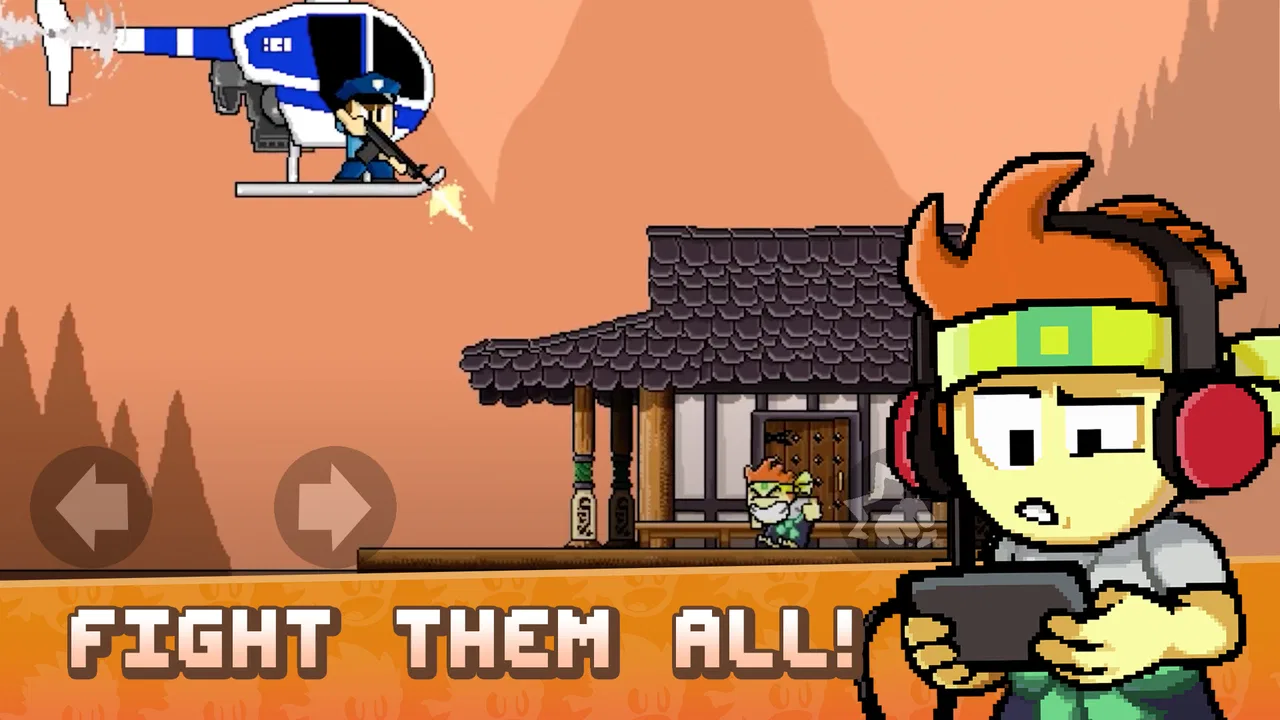
The opening appeal is not subtle. Dan is placed in a bright, exaggerated world where the basic verbs are immediately readable: run, jump, attack, and react. I never needed a long explanation to understand what the game wanted from me. That matters on a phone, where a game has only a moment to earn attention before a message, commute, or daily chore interrupts.
You May Also Like

 Pandora - Music & Podcasts
Pandora’s Music Is Easy to Start, but Harder to Recover
Pandora’s strength is its low-effort path from a seed to a station. Its weak spot is how much confidence it asks you to place in connection, setup, and quiet recovery.

 AccuWeather: Weather Radar
AccuWeather Review: A Quick, Clear Forecast for Everyday Decisions
For everyday plans, the best forecast is the one you can understand quickly. AccuWeather makes rain timing, radar, and local conditions easy to act on, with a few trade-offs.

 Hill Climb Racing
Why Hill Climb Racing Still Turns Crashes Into One More Run
A tiny car, a bumpy hill and one more upgrade: Hill Climb Racing keeps resurfacing because its simple chaos makes every near-miss feel personal.

 AliExpress - Shopping App
AliExpress Makes Global Shopping Feel Personal, but Shoppers Bear the Risk
AliExpress turns a global marketplace into a pocket-sized discovery engine. Its reach is useful, its shopping loop compelling, and its trade-offs easy to miss.

 Lords Mobile: Kingdom Wars
Lords Mobile Is a Kingdom-Building Routine, Not a Quick Match
A case-by-case verdict on the building, battles, device demands, and social commitments that make Lords Mobile rewarding for some players and exhausting for others.

 PDF Scanner app - TapScanner
TapScanner Makes Paperwork Easier to Capture, Check, and Share
TapScanner makes scanning with a phone feel less like a rescue operation and more like a dependable step in getting work done. Its capture tools are useful, though not flawless.
More From Our News Desk
View All News


The platforming and fighting are tied together rather than treated as separate activities. A jump is not only about reaching a higher ledge; it can also be a way to reposition before an enemy closes in. An attack is not just a button press for clearing a screen; it becomes part of the timing of movement. This gives the game a satisfying rhythm even when I am only playing one small stretch.
Touch controls are always a possible weakness in this kind of game, because a virtual control layout cannot provide the same physical certainty as a console controller. I found the controls approachable, but the screen can still feel busy when movement, enemies, platforms, and attacks demand attention at once. The best results come when I stop treating every encounter as a frantic button-mashing contest and instead use the layout deliberately: move into a safe position, watch the immediate threat, then commit to an attack or jump.
That small adjustment is one of the first useful lessons I took from the game. New players may rush because the presentation feels energetic, but rushing makes the platforming less reliable. I had more success when I treated each short section as a sequence of decisions rather than one continuous sprint. It is a simple approach, yet it makes the game feel more responsive and gives the combat a little more personality.
A good fit for short, interrupted sessions
The strongest use case is a spare pocket of time: waiting for an appointment, taking a break between errands, or sitting down after dinner when I want something active but not mentally heavy. I can get the central pleasure quickly. There is no need to remember a complicated story situation before playing, and I do not need to rebuild a strategy from scratch after a few hours away.
That does not mean every session feels identical. A short run can focus on simply progressing, while another can be about improving how I handle a difficult section. The distinction is important. The game offers immediate pleasure through movement and impact, but its replay value comes more from execution than from a constantly changing set of ideas.
For example, if I have only ten minutes, I can play with a straightforward goal: make progress and enjoy the action. If I have longer, I can replay a section and pay attention to missed opportunities, awkward jumps, or moments where I attacked too early. This makes the game more flexible than a platformer that requires a long uninterrupted stage every time I open it.
What happens when real life interrupts
Dan the Man is particularly comfortable as a game I can leave and return to. Its basic controls and visual language are easy to recover, so I do not spend the first minute wondering what I was doing. That is a major advantage over games built around long tactical chains or complex menus. When my attention is divided, I can come back and understand the immediate objective quickly.
I still would not call it completely frictionless. Platform action depends on timing, and an interruption at the wrong moment can turn a successful attempt into a mistake. A phone call or a sudden notification can break concentration just as I am lining up a jump or dealing with an enemy. The game is interruption-tolerant in the broader sense that it is easy to resume, but the action itself does not become magically forgiving when attention disappears.
My practical advice is to pause or stop at a calm point whenever possible rather than trying to play through every interruption. If I know I may need to put the phone down, I avoid beginning a demanding sequence immediately before that interruption. This sounds obvious, but it changes the experience: the game remains a quick source of fun instead of becoming a test of how much progress I can lose while multitasking.
This is also where the game differs from slower casual alternatives. A puzzle game may let me stare at the same board while answering a message. Here, the pleasure depends on motion and timing, so it is better for a focused short break than for constant partial attention. If your phone time is usually fragmented into several-second glances, this may not be the right choice. If you can give it a few uninterrupted minutes, it works much better.
How the action holds up after the novelty
The first impression is easy to enjoy, but the more important question is whether the game gives me a reason to return. In my experience, its replay value is based on improving familiarity with the action rather than discovering a completely different game each time. The controls become more comfortable, enemy encounters become easier to read, and sections that once felt chaotic can start to feel like patterns I can manage.
That kind of repetition suits players who enjoy arcade mastery. I like the feeling of turning an awkward attempt into a cleaner one, especially when I understand that the problem was my timing rather than an unclear objective. The game rewards attention to spacing and rhythm. I do not need to memorize a huge rulebook; I need to notice what is happening and respond more accurately.
However, players looking for endless novelty may reach the limits sooner. The core loop remains recognizable: move through a platforming environment, deal with enemies, and keep pushing forward. The presentation gives that loop energy, but it does not completely remove the repetition built into the genre. I would recommend it more confidently to someone who enjoys replaying action stages than to someone who needs a new mechanic every few minutes.
One helpful way to approach it is to set a small personal target instead of expecting the game to entertain forever. I might aim to get through a section with fewer mistakes, handle a particular enemy more confidently, or simply finish a short session without rushing. Those goals make the repetition feel purposeful. Without them, the game can become a sequence of similar bursts that are fun in the moment but less memorable afterward.
The trade-off between accessibility and precision
The game’s accessibility is one of its best qualities, but accessibility and precision are not always the same thing on a touchscreen. The controls communicate the main actions clearly, which helps beginners start quickly. At the same time, a player who wants extremely exact platforming may notice the limitations of playing on glass rather than with physical buttons.
I found that the game is most enjoyable when I accept its arcade character instead of demanding the precision of a dedicated console platformer. It is built for quick reactions and readable action, not for turning every jump into a laboratory experiment. When I made that adjustment, minor control imperfections bothered me less because the overall pace kept moving.
This is a useful dividing line when choosing the game. If you want a colorful action platformer that can be learned quickly and played in short bursts, it is a strong candidate. If your priority is the most exact possible control, a controller-supported platformer or a more measured game may suit you better. Dan the Man earns its place through immediacy, not through being the most technically demanding platformer available.
Progress, spending, and the free-to-play decision
The game is free to download, which makes it easy to try without making a financial commitment first. It also includes in-app purchases ranging from $0.99 to $59.99 per item. That range is worth keeping in mind before handing the phone to a younger player, particularly because the content rating is Teen and the game’s colorful presentation can make it feel more harmless than a purchase screen actually is.
I recommend deciding in advance whether you are treating the game as a free arcade diversion or as something you may spend money on. The first approach keeps the experience simple: play, learn the action, and stop when the session no longer feels rewarding. The second can make sense for a committed player who wants to support the experience or remove a particular source of friction, but I would not install it with the assumption that purchases will automatically create better gameplay.
The important trade-off is emotional rather than technical. A free game is easy to revisit because there is little pressure to justify the download, but optional spending can change how I judge each session. If I begin measuring fun by what a purchase might unlock or accelerate, the clean arcade pleasure becomes less immediate. I prefer to play first, decide whether the core movement and combat are satisfying, and only then consider whether spending fits my own habits.
Who should play it, and who should skip it
I would recommend it to fans of old-school action platformers, players who enjoy lively arcade combat, and anyone who wants a game that becomes understandable almost immediately. It is also a good match for people who like improving through repetition. The short-session structure means I can enjoy it without reserving an entire evening, while the action gives me enough to focus on when I want more than a passive time-killer.
I would be more cautious about recommending it to someone who dislikes virtual controls, gets frustrated by repeated attempts, or wants a calm game that can be played while constantly distracted. The Teen rating is another reason to choose it thoughtfully for younger users. And if you mainly want deep role-playing systems, a large open world, or a platformer built around exploration rather than arcade momentum, this is probably not the best direction.
Compared with endless runners, it gives me more direct control over the character and more room to think about individual encounters. Compared with puzzle games, it offers faster feedback but demands more attention. Compared with traditional console platformers, it is easier to pick up for a few minutes, though the touchscreen may not feel as exact. Those comparisons explain its appeal better than calling it simply “fun”: it occupies the space between a quick arcade hit and a more involved action game.
Practical advice for getting more from each session
My first tip is to resist the urge to attack every threat immediately. In a platforming game, movement is often the safer first decision. Creating space can make the next attack easier, while rushing toward an enemy can turn a manageable encounter into unnecessary damage or a missed jump.
My second tip is to use short sessions as practice rather than judging them only by progress. If a section goes badly, replaying it with one specific focus—timing a jump, reading an enemy, or avoiding panic—usually feels more productive than restarting with the vague goal of “doing better.” This turns repetition into a learning loop.
My third tip is to play in a setting where you can give the screen a few uninterrupted minutes. The game is easy to resume, but its best moments rely on concentration. A quiet break is better than trying to squeeze it between constant notifications. I also prefer lowering the expectation of a long achievement: a clean little run can be a successful session even if I do not make dramatic progress.
Finally, I would check the purchase settings before letting someone else use the device. The free entry point is appealing, but the available purchase range means casual access should still be supervised when appropriate. That small bit of preparation keeps the game focused on its strongest feature: immediate action that does not require a complicated commitment.
My casual verdict after living with the rhythm
Dan the Man: Action Platformer works because it understands the value of getting to the fun quickly. I can start without studying systems, enjoy a clear burst of platforming and combat, and return later without relearning an elaborate structure. Halfbrick Studios has made an arcade game that feels comfortable on a phone, especially for players who want action in compact sessions.
It is not perfect for every kind of mobile player. The touchscreen can make precise moments less comfortable than they would be with physical controls, interruptions can still spoil timing, and repetition will not satisfy anyone who needs constant novelty. The free-to-play structure also deserves sensible boundaries because individual in-app purchases can reach $59.99.
The current version is 1.12.72, and the game supports devices running Android 7.0 or later. It was released on October 4, 2016, but its straightforward arcade design still makes sense for a modern phone. I would install it when I want a colorful, active break with a clear beginning and an easy return point. My recommendation is simple: choose it for immediate platform-fighting pleasure and replay through skill, not for endless variety or perfectly precise controls.
FAQs for Dan the Man: Action Platformer
01What is the main objective of Dan the Man: Action Platformer?
Dan the Man: Action Platformer is a retro-style action game where players navigate through various levels, defeating enemies and overcoming obstacles. The main objective is to progress through the storyline, which involves rescuing villagers, defeating evil bosses, and ultimately saving the day. The game combines classic platforming with engaging combat mechanics.
02Are there different characters to play in Dan the Man?
Yes, Dan the Man offers a selection of characters to play, including Dan, Josie, and Barry Steakfries from Jetpack Joyride. Each character has unique abilities and fighting styles, allowing players to choose one that best suits their playstyle. Characters can be customized with different outfits and power-ups, enhancing the gameplay experience.
03Does Dan the Man: Action Platformer require an internet connection?
Dan the Man can be played offline, which is a great feature for those who want to play on the go without worrying about internet connectivity. However, certain features, such as accessing leaderboards and in-game purchases, will require an internet connection to function properly.
04What kind of in-app purchases are available in Dan the Man?
The game offers optional in-app purchases that include coins, costumes, and special abilities to enhance gameplay. While the game is free to download and play, these purchases can help players progress faster or customize their characters more extensively. However, all content can still be unlocked through regular gameplay without spending money.
05How challenging is Dan the Man: Action Platformer for new players?
Dan the Man is designed to be accessible for both new and experienced players. It starts with easier levels to help players get accustomed to the controls and mechanics. As players progress, the levels become more challenging with tougher enemies and intricate platforming sections, providing a rewarding experience for those who enjoy a challenge.
Pros
- Engaging retro-style graphics.
- Smooth and responsive controls.
- Variety of challenging levels.
- Frequent updates and new content.
- Offline play available.
Cons
- In-app purchases can be pricey.
- Occasional ad interruptions.
- Limited character customization.
- Some levels feel repetitive.
- Requires significant storage space.

Dan the Man: Action Platformer
Gallery